Services · Greenery and tree care
Instrumental tree surveys: tomography and pulling tests
When visual reading leaves a precise doubt, the instrument measures what the eye cannot see: how much sound wood remains in a hollow trunk, how the root plate responds to a known load. It is the step that turns a hypothesis into data, and data into a reasoned decision.
At a glance
What we measure. The extent of decay and cavities in the trunk cross-section (sonic tomography), the wood density profile along a radius (resistance drilling), the response of trunk and root anchorage to a controlled load (pulling test).
For whom. Public bodies and tree-stock managers, landscape contractors working on public tenders, condominium administrators, law firms and party-appointed experts, colleagues seeking an instrumental second opinion.
What you receive. A digitally signed report integrating visual and instrumental assessment, with test results attached, a reasoned failure-propensity class and care recommendations with the date of the next inspection.
Do you have trees to investigate?
Write to me with who you are, where the trees are, how many there are and what doubt has arisen; if a visual assessment already exists, attach it. If you prefer to talk, call me: I reply within one working day.
Send an emailThe right instrument for the right doubt
Each instrument answers a different question. Choosing it well is half the diagnosis.
| Question | Survey | What it returns |
|---|---|---|
| How extensive is the decay or cavity in the trunk, and where? | Sonic tomography | A map of the cross-section showing altered wood, at one or more heights |
| How much sound wood remains at a precise point? | Resistance drilling (Resistograph type) | A drilling-resistance profile along a radius: thickness of the sound wall |
| Can trunk and root plate withstand wind load? | Controlled pulling test | Root-plate inclination and trunk strain under a known load; safety factors against uprooting and stem breakage |
Tests are carried out with dedicated equipment, a field team and, when needed, tree climbers and anchoring vehicles.
The instrument confirms a hypothesis
The CONAF National Guidelines for tree risk assessment (Resolution no. 88 of 18/03/2026) require decisions to arise from a reasoned synthesis of several parameters — morpho-physiological, phytosanitary, biomechanical, contextual — and never from a single indicator. A percentage of degraded wood read on a tomogram is not, on its own, enough to decide on felling.
That is why the instrumental survey comes after visual reading, on a precise hypothesis: where to look, what to measure, which threshold decides. The protocol of the Italian Society of Arboriculture calls for it on trees in the highest failure-propensity classes, alongside documented analytical assessment. The result is a report that a third assessor can retrace step by step: this is what makes it solid before a residents’ meeting, a technical department or a court.
When it is needed
- A real visual doubt: a cavity at the collar, fungal fruiting bodies, extensive wounds, a root plate that moved after a storm.
- Trees in busy places: schools, cemeteries, parks, streets, where the target matters most.
- A decision to defend: a disputed felling, a valuable tree to keep, a constraint requiring technical reasons.
- A second opinion: on classifications or surveys carried out by others, before intervening.
A recent case
October 2026, Basilicata: five large pines in a public site crowded on remembrance days. After visual reading of each tree, controlled pulling tests and sonic tomography on the trunks; safety factors calculated tree by tree, risk estimated on actual use of the site, care recommendations with deadlines. A single report, delivered before the busiest days.
Frequently asked questions
Is an instrumental survey always necessary?
No. It is used where it decides something: on a tree whose visual reading leaves a precise doubt, not as a routine on every tree. The proportionality required by the CONAF Guidelines says so, and so does economic common sense.
What is the difference between tomography and a pulling test?
Tomography images the inside of the trunk: it shows where and how much the wood is altered. The pulling test measures the behaviour of the whole tree under load: it shows whether root plate and trunk hold. The two tests often complement each other.
Can they be carried out on any tree?
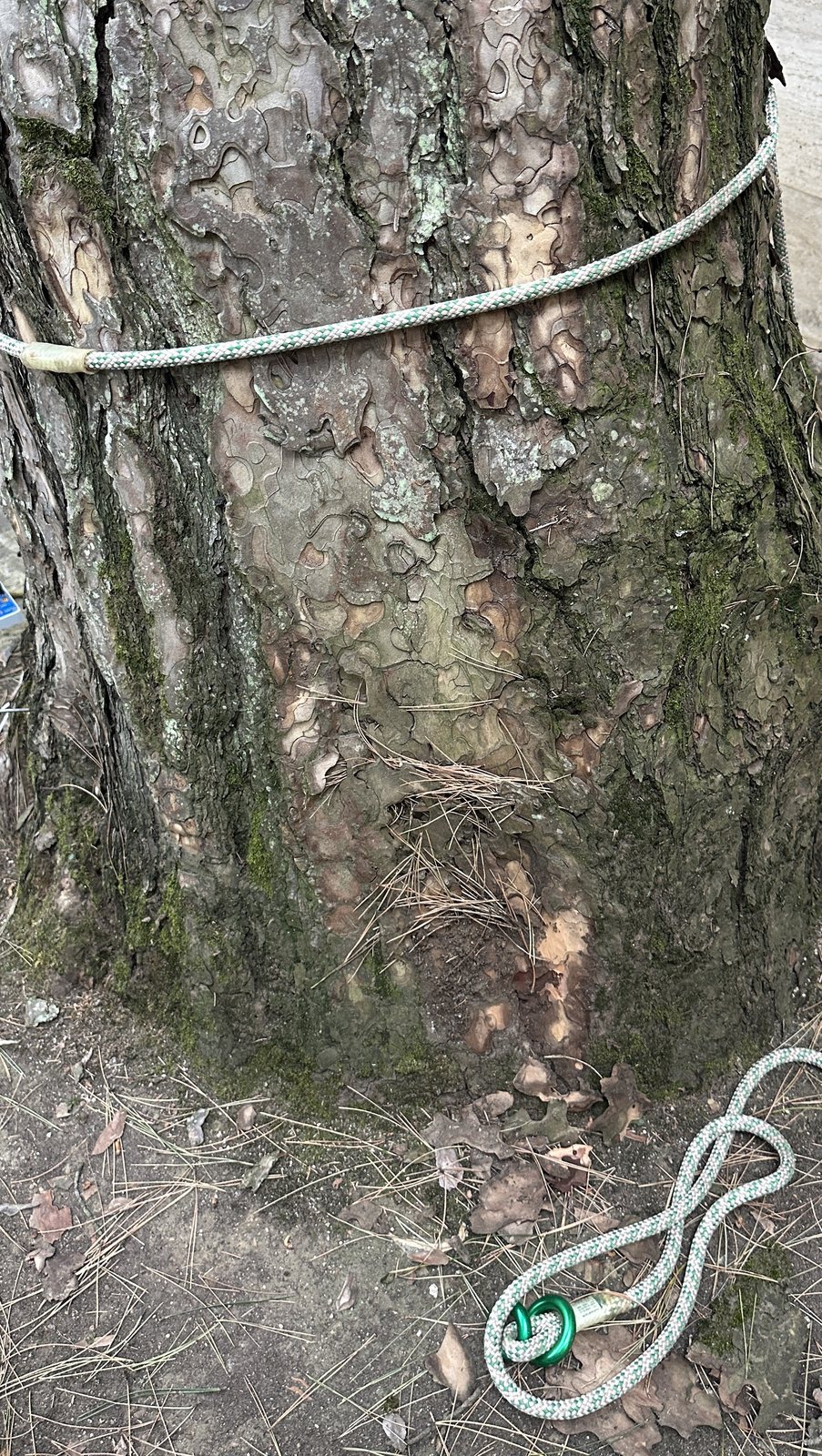
Almost always. The pulling test needs an anchor point in a useful direction (a nearby tree, a heavy vehicle, a ground anchor) and room to lay the rope; the preliminary site visit also checks this.
Do you give second opinions on other experts’ reports?
Yes: reviewing someone else’s assessment, with confirmatory tests if needed, is often the most economical way to decide well on a tree stock that has already been classified.
Do you work outside the province of Salerno?
Throughout Campania and nearby areas within about two hours of Salerno: the Potenza area, Vallo di Diano, southern Lazio.