
Services · Greenery and tree care
Public and urban green spaces
A city's trees are an asset that gains value over the years: they give shade, hold water, cool the streets, give places their identity. Governing them well means knowing them one by one, knowing which stand firm and which need care, and deciding with a plan that looks far ahead. This is the work the Studio does for municipalities, public bodies and managers.
At a glance
For whom. Municipalities and technical departments, park authorities and consortia, schools and universities, public utility companies, landscape maintenance contractors, design firms looking for an agronomist on their team. And large private estates: residential parks, hospitality venues, companies.
What we do. GIS-based tree inventories · stability assessment (VTA) of entire tree stocks, with instrumental surveys where needed · Urban Green Plans and green-space regulations · design of public green spaces and new plantings, with specifications, site supervision and acceptance testing · heritage trees · support to public procurement officers and reports for permits and disputes.
Where. Based in Pellezzano (Salerno). Regularly throughout Campania — Salerno and its province, Cilento and Vallo di Diano, Avellino, Naples, Caserta, Benevento, the Sorrento peninsula — and in neighbouring regions within about two hours’ drive: Basilicata (the Potenza and Lagonegro areas), southern Lazio (Cassino, Frosinone, the Gulf of Gaeta), Molise (Isernia). Where the assignment warrants it, further afield too: elsewhere in Italy and abroad.
Thinking about your organisation's green spaces?
Write to me with your organisation, your role and what you need: an inventory, a VTA, a plan, a project. A rough number of trees or areas and a line on the context are enough. If you prefer, let's talk on the phone.
Send an emailWhat Italian law asks of public green-space managers
Three texts shape the work on a public body’s green spaces today.
- Law no. 10 of 14 January 2013. Every municipality must inventory and classify the trees planted in its urban public areas; two months before the end of the term, the mayor publishes the tree balance, comparing the trees present at the start and at the end and reporting on the condition of green areas. The same law protects heritage (monumental) trees: municipal inventory, regional recognition, a tree protection zone, fines from €5,000 to €100,000 for felling or serious damage.
- Minimum Environmental Criteria for public green spaces (Ministerial Decree no. 63 of 10 March 2020). Before contracting out green-space management, the authority must have at least a level 1 inventory, i.e. a georeferenced register of its areas; municipalities above 15,000 inhabitants also need the tree register (level 2), which the contractor must complete if missing. The contractor’s management plan is based on that inventory. For plant supplies: guarantee on 100% of plants until final acceptance, with a survival report by the site supervisor.
- CONAF National Guidelines for tree risk assessment and management (Resolution no. 88 of 18/03/2026). Assessment is reserved to Agronomists and Foresters registered with the professional Order; the report documents method, parameters and reasons; felling is the last resort, after alternatives have been examined and ruled out.
In practice, for a public body the inventory is the foundation of everything: the management tender, the tree balance, the VTA schedule, the plan.
Services
Tree inventory and register
Field survey of areas and trees, coding and georeferencing in an open, interoperable GIS database, with the fields the Minimum Environmental Criteria require for areas (level 1) and trees (level 2): species, size, condition, location, photographs. Delivered this way, an inventory becomes the technical department’s everyday tool and the basis for tenders and the tree balance. The Studio also works on existing inventories: checking, updating, completing.
Stability assessment of tree stocks
VTA of avenues, parks, school grounds, cemeteries, roadside trees: visual reading of each tree, instrumental surveys where the reading leaves a doubt, a reasoned failure-propensity class, risk estimated on the actual use of each place, and an inspection schedule stating which tree to check again and when. Priorities come already ranked by urgency, ready for works planning. Method details on the Tree Stability Assessment page.
Urban Green Plan and green-space regulations
The Plan reads the tree stock as a whole — species, ages, vulnerabilities, climate pressures — and sets out care, replacements and new plantings over a horizon of years. The Regulations set the rules: root protection on building sites, pruning, felling, compensation. These are the tools that let a public body plan ahead instead of chasing emergencies.
Design of public green spaces and new plantings
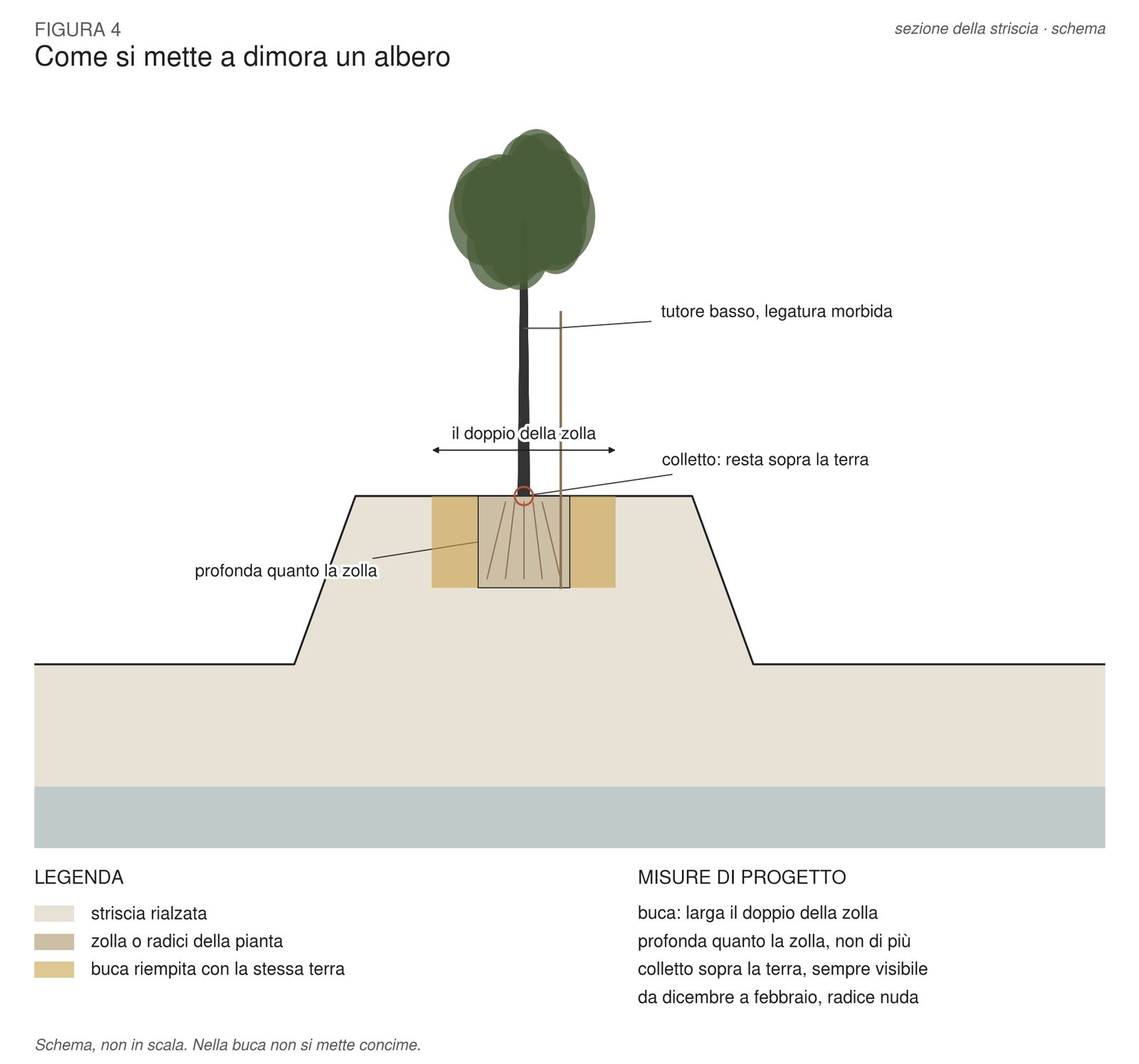
Squares, parks, avenues, school grounds, urban forestation areas: soil and site analysis, species chosen for the climate to come, workmanlike planting, specifications and bill of quantities compliant with the Minimum Environmental Criteria, site supervision, survival report and acceptance, care plan for the following years. A project is measured after handover, as the trees grow: that is why the care plan is part of it.
Heritage trees
Municipal inventory of notable trees and recognition proposals to the Region; dedicated records, monitoring and care programmes; reports supporting permit applications for work on protected trees.
Support to procurement officers, contractors and designers
Review of management plans and technical bids against the Minimum Environmental Criteria; agronomic reports for permits, constraints and proceedings; expert reports after tree failures and damage; the agronomic part of integrated projects, including in joint ventures with engineering and architecture firms.
How we work
Know before prescribing. No plan without an inventory, no prescription without a site visit. Every choice starts from what is there, where, and in what condition.
Read the tree stock as a whole. The population of trees, not the single specimen: species and age distribution, recurring vulnerabilities, climate and use pressures.
Document so that a third party can retrace it. Method, parameters and reasons written out clearly: this is what makes a report defensible before a council, a supervisory authority or a court.
Give the department tools, not just documents. Open GIS databases, records, inspection schedules with deadlines: material the public body uses every day, not a file to be archived.
Recent work
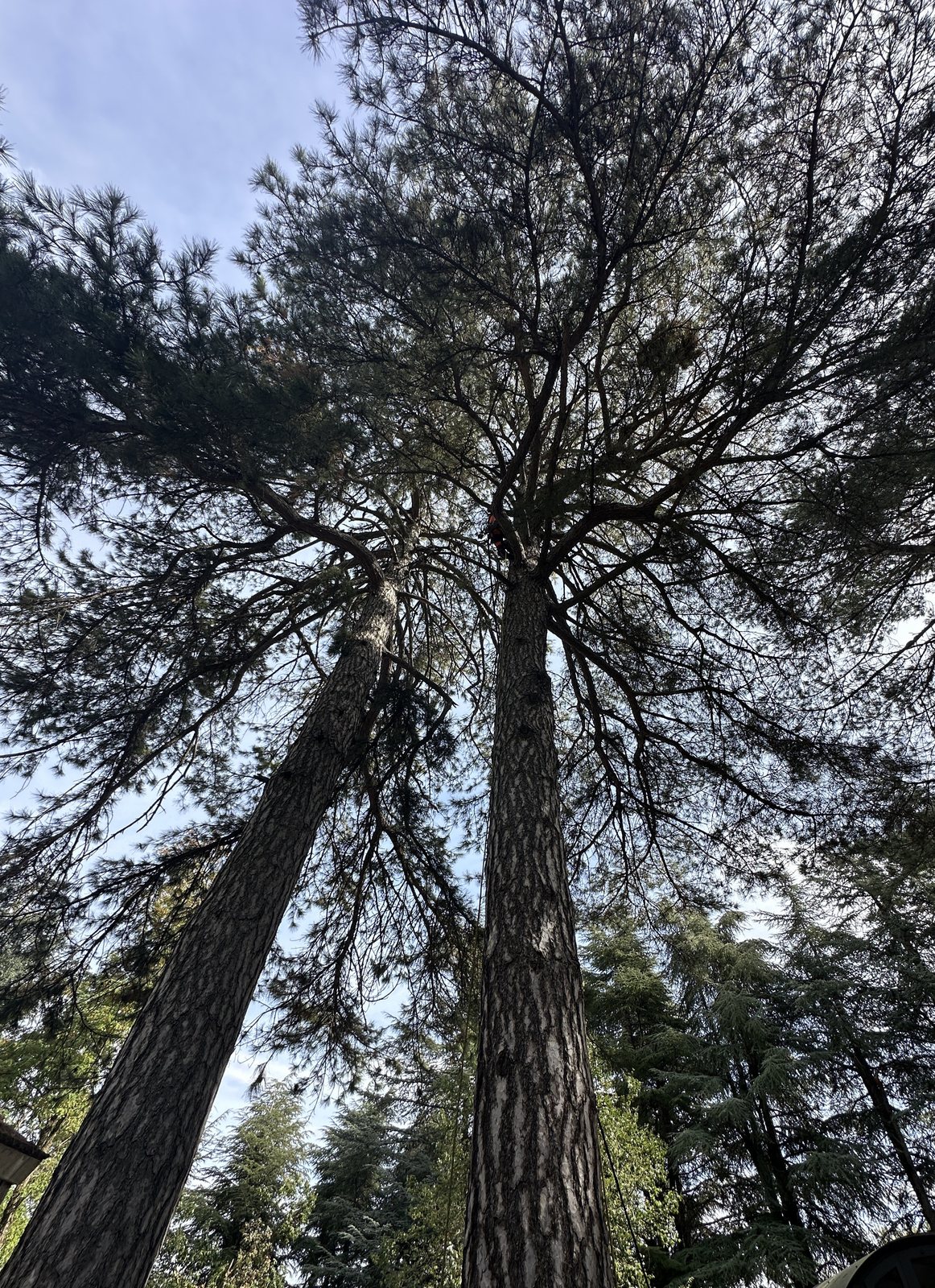
Public site, Basilicata, 2026. Five large pines in a place crowded on remembrance days: visual assessment, pulling tests and sonic tomography, risk estimated on actual use, care recommendations with deadlines, delivered before the busiest days.
Public utility plant, Salerno, 2026. Twelve trees — cedars, pines and a magnolia — after a storm: technical safety report for the contractor in charge of the works.
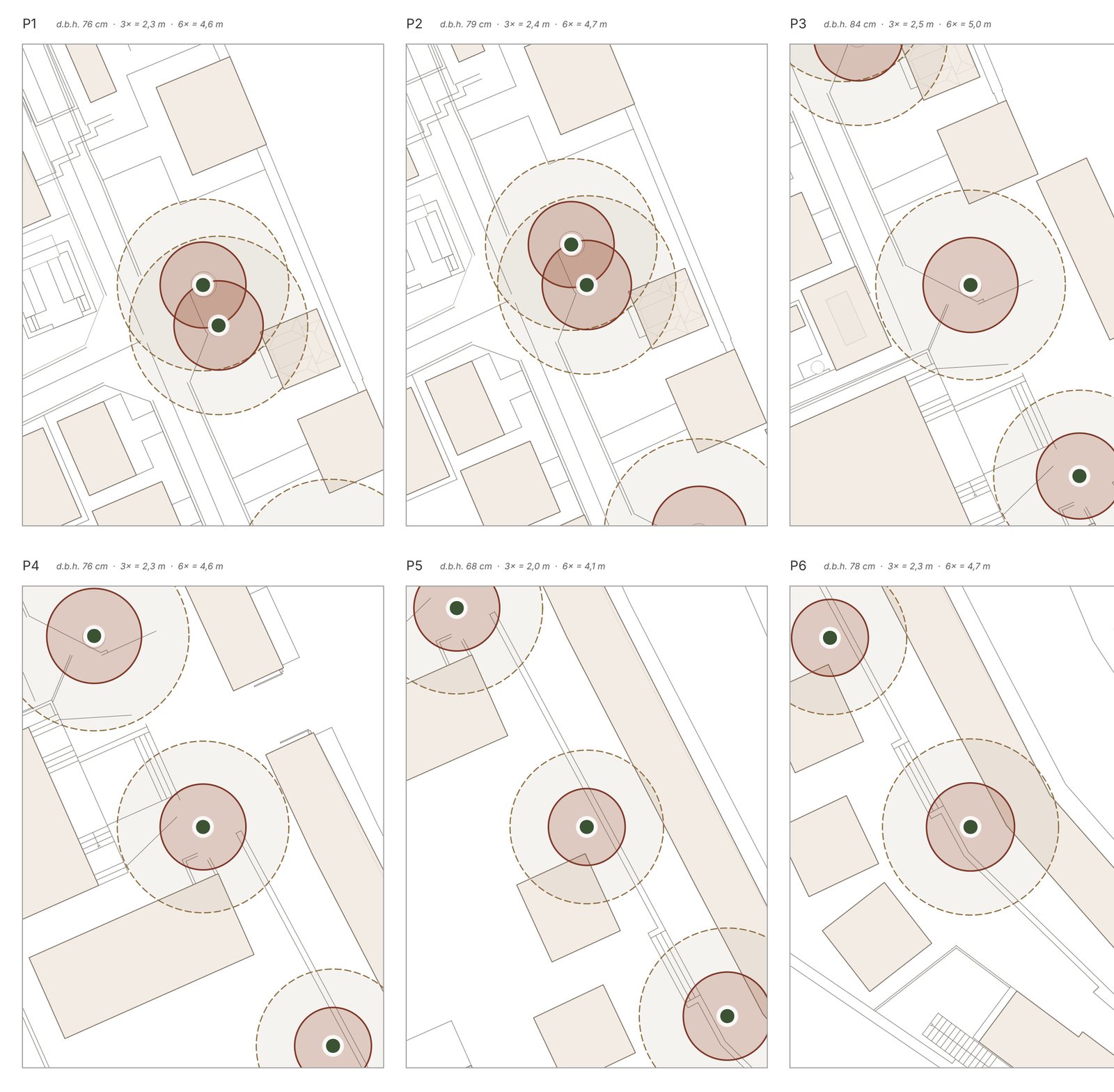
Residential park, Salerno, 2025-2026. Stability assessment of an entire park of cedars, eucalyptus and other large species, followed by the redesign of nine flowerbeds: one path, from the safety of the existing trees to the design of the new planting.
How to commission the Studio
The Studio is qualified on MePA, the Italian public e-procurement marketplace, in the category of naturalistic, landscape and forestry professional services, and is registered on the supplier and professional lists of several public bodies in Campania. For integrated design commissions it is available to work in joint ventures with engineering and architecture firms.
Frequently asked questions
Is a tree inventory mandatory for an Italian municipality?
Yes. Law 10/2013 requires every municipality to inventory and classify the trees planted in its urban public areas, and the 2020 Minimum Environmental Criteria require at least an inventory of areas before contracting out green-space management; above 15,000 inhabitants, a tree register too.
What is the tree balance?
It is the document in which the mayor, two months before the end of the term, reports how many trees there were in urban public areas at the start and at the end, and the condition of green areas. It cannot be drawn up without an up-to-date inventory.
Who can sign the stability assessment of public trees?
The 2026 CONAF National Guidelines reserve it to Agronomists and Foresters registered with the professional Order, with experience in the field, and require a report stating method, parameters and reasons.
What is an Urban Green Plan?
It is the document that programmes the care of a tree stock over a horizon of years: inventory, choices by groups of trees, replacements and new plantings, schedule, reassessment criteria. It is the tool that lets a public body stop chasing emergencies.
Can a heritage tree be pruned?
Work on trees recognised as monumental requires authorisation; unauthorised or non-compliant work is fined under Law 10/2013. The agronomic report accompanies the application.
“Maintenance” or “care” of green spaces: does it make a difference?
It changes the idea behind it. Maintenance is what you do to a machine: keep it as it was delivered. A tree reacts, heals, ages. That is why we speak of care: more demanding technical work, because it starts from how a plant actually works.
Do you also look after condominiums and large private estates?
Yes: for residential parks, hospitality venues and companies the Studio prepares inventories, VTA and a management plan with a schedule of works, scaled to the estate.